Alleged ransomware decryption: US indictment against ransomwarehelp.com
The indictment
On 18 November 2026, a grand jury in Rhode Island indicted Juan Ricardo Palacio Escobar for wire fraud. He is the CTO and co-founder of the company that KrebsOnSecurity identifies as ransomwarehelp.com. The website promised “proprietary, cryptography-based decryptor software” and explicitly advised “Do not pay the ransom!”
According to the indictment, a software company from Kansas paid around 720,000 dollars and received a signed certificate stating that no negotiation had ever taken place. At the same time, Palacio allegedly paid the attackers around 445,000 dollars in bitcoin for the key.
The FBI operation
In June 2026, the FBI played both the victim and the ransomware group. Palacio bought the decryptor for 6,003 dollars, charged 16,010 dollars for “proprietary decryption tools” and, according to the indictment, kept around 10,010 dollars. The presumption of innocence applies to the accused.
Not an isolated case
Palacio is not the only case. According to KrebsOnSecurity, Zohar Pinhasi, CEO of MonsterCloud, and Edward Dubrovsky of the Canadian firm Cybersteward were also charged this autumn. Ransomware negotiator Angelo Martino was sentenced in July to 70 months in prison for conspiring with the BlackCat/ALPHV group.
Apart from the verdict against Martino, these are allegations on which no court has yet ruled. The promises with which, according to the indictment, the company advertised its services can nevertheless be assessed technically.
What decryption can achieve technically
Current ransomware usually encrypts files symmetrically, for example with AES or ChaCha20, and protects the file keys with the attackers’ public key. If this is implemented properly, we consider decryption without the private key to be practically impossible, even with hundreds of servers and “intelligent brute-force”. Where it has succeeded so far, this was mainly because the malware had implementation flaws or law enforcement had seized keys. Such decryptors are usually published free of charge.
When there is no backup
If there is no usable backup and no public decryptor, the only realistic option is the attackers’ original decryptor and therefore a tough negotiation with the threat actor. Our work is transparent to the client at all times. They know who is being negotiated with, what amount is at stake and which part of the invoice is ransom and which is fee. A service provider that does not commit to this in writing should not be given remote access to the network.
Guide · PDF · German
Ransom demands after a ransomware attack
A guide for management: what needs to be clarified before a decision, which legal framework you should know and what a negotiation can achieve.
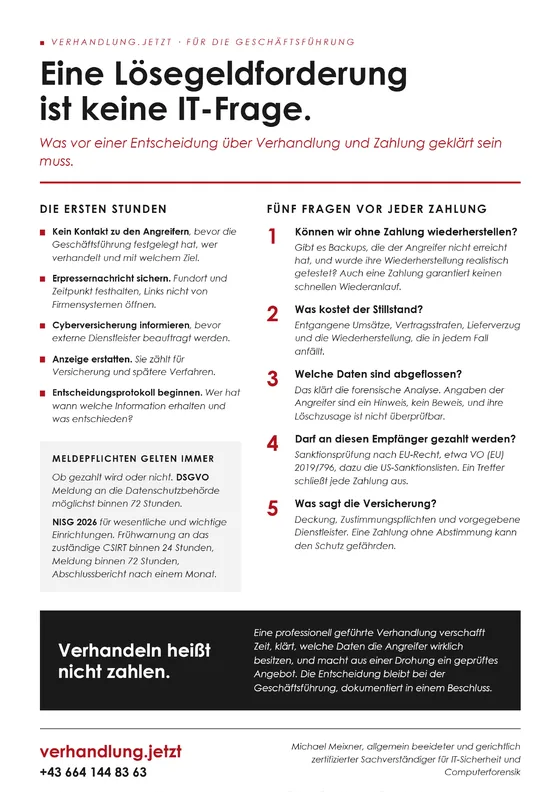
Flyer · PDF · German
A ransom demand is not an IT question
What needs to be clarified before deciding on negotiation and payment – on a single A4 page for management.
Sources
- KrebsOnSecurity: CTO of ‘RansomwareHelp’ Indicted for Wire Fraud (20 November 2026)
- Indictment: United States v. Juan Ricardo Palacio Escobar, U.S. District Court, District of Rhode Island, 1:26-cr-00096 (18 November 2026)