DEF CON Singapore 2026 – when the hacker elite comes to Asia
Singapore, 28 April 2026. There are moments in a professional career that you never forget. Today is one of them.
I am currently in Singapore – as part of an Austrian business delegation organised by Advantage Austria (the foreign trade arm of the Austrian Economic Chamber, WKO) on its “Future of Cybersecurity” study trip – and I am spending today at DEF CON Singapore 2026. The very first DEF CON on Asian soil.
What is DEF CON?
Anyone working in cyber security knows DEF CON. For everyone else, a brief introduction.
DEF CON is the world’s largest, best-known and most influential hacker conference. Founded more than 30 years ago in Las Vegas, it has grown from a small underground meet-up into a global must-attend event for security researchers, penetration testers, government agencies, the military and industry. If you want to understand the world of offensive IT security, you need to know DEF CON.
The conference is known for its legendary villages – dedicated areas focusing on individual topics, from hardware hacking and social engineering to industrial control systems and AI security. Equally iconic are the capture-the-flag (CTF) competitions, in which the world’s best teams compete against each other, solving real attack and defence scenarios.
It is no coincidence that DEF CON is taking place in Singapore for the first time in 2026.
Why Singapore? Why now?
Singapore has long been more than a financial and logistics hub. In recent years, the city has become the cyber capital of South-East Asia – with one of the most advanced national cyber security architectures in the world, an active start-up scene and a regulatory framework that serves as a model for the entire ASEAN region.
More than 56 of the world’s top 100 cyber security companies already have a presence in Singapore – many with operational and engineering capacity, not just sales offices. The reason is simple: if you want to understand and serve Asia, you do it from here.
Asia is no longer just a market for cyber security. Asia is a centre of cyber security talent, research and offensive expertise.
The Asian hacker perspective – a blind spot for Europe?
As an Austrian cyber security expert and court-certified expert witness for IT security, I deal every day with the threat landscape facing European companies. Ransomware, phishing, advanced persistent threats – most of the attacks I analyse in my forensic work originate in, or rely on infrastructure in, the Asia-Pacific region.
And yet: the European cyber security community looks east far too rarely.
We build our defences on what we know – European and American frameworks, Western threat intelligence sources, familiar attack vectors. But a considerable share of the world’s most capable security researchers, red teamers and exploit developers come from South-East Asia, China, India and South Korea.
DEF CON Singapore brings this community together on home ground for the first time. It is an opportunity no European practitioner should ignore. Because you cannot learn how attackers think from a report. You have to sit in the same rooms.
What I am focusing on today
From my work as a digital forensics examiner and incident responder, three topics at DEF CON interest me most:
- Offensive techniques & exploit development: which new attack vectors are currently being discussed in the community? What are red teams in Asia seeing that is not yet on our radar in Europe?
- OT & industrial security: operational technology is the most vulnerable segment of critical infrastructure – worldwide. Especially in the ASEAN region, where industrialisation and digitalisation are advancing rapidly at the same time, new risks emerge every day.
- AI-enabled attacks: generative AI is fundamentally changing the attack surface. Deepfake-based social engineering, AI-assisted phishing, automated vulnerability discovery – these are no longer future scenarios but the present. How is the international research community responding?
DEF CON and the Austrian perspective
Austrian companies often underestimate how directly they are affected by Asian threat actors. Ransomware groups such as LockBit, INC Ransom or Black Basta – groups whose attacks I regularly deal with in my incident response work – operate globally, with infrastructure and members across the entire ASEAN region.
Those who understand the threat can defend themselves better. That is the real reason I am here today.
Outlook
This week in Singapore is far more than a study trip for me. It is a fundamental change of perspective.
With NIS2, DORA and the Cyber Resilience Act, Europe is currently building a strong regulatory foundation. Singapore shows what is possible when regulation, technology, talent and international cooperation work together. And DEF CON Singapore shows where the next wave of threats – and of innovation – is emerging.
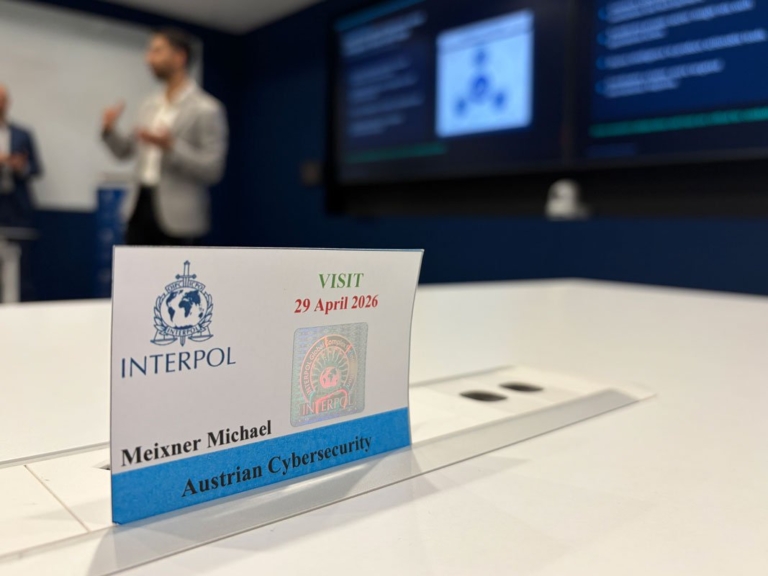
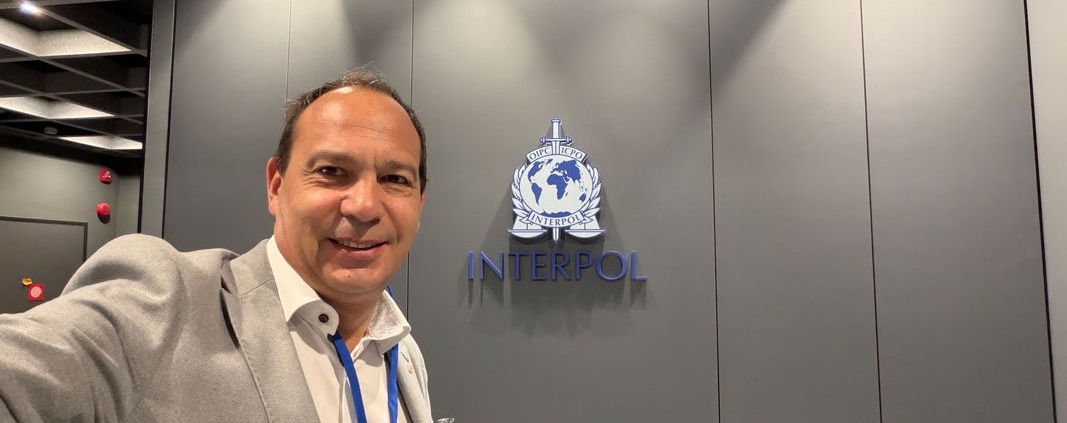
As a cyber security expert, forensic examiner and court-certified expert witness, I am taking impressions from this week that will directly shape my work in Austria and Europe. More reports from Singapore will follow – from the INTERPOL briefing, the meeting with Singapore’s Minister of State for Digital Development, the Punggol Digital District and the AWS Cyber Resilience Center.