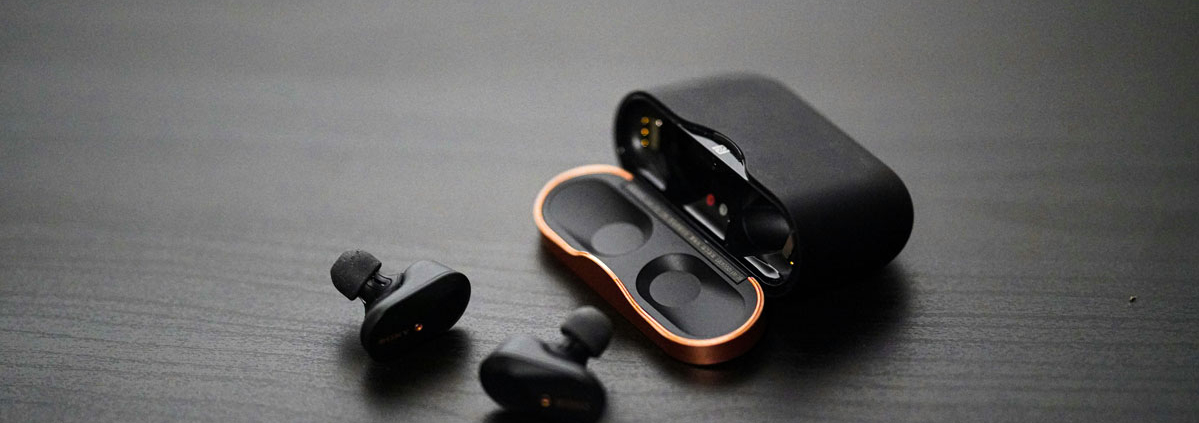
Why this Bluetooth vulnerability keeps me up at night as a mobile forensics expert
I have been working in digital forensics for more than two decades. I have investigated ransomware attacks, reconstructed cryptocurrency thefts and testified in dozens of court proceedings as a court-certified and sworn expert witness for IT security.
But a publication this week genuinely made me stop and think.
Not because of its technical sophistication. Because of its forensic invisibility.
What was discovered?
Researchers at KU Leuven have published a critical vulnerability in Google’s Fast Pair Service (GFPS) – the protocol that enables convenient one-tap pairing of Bluetooth accessories such as headphones, earbuds and speakers.
The result: of 25 premium devices tested from 16 manufacturers, 17 (68 %) were vulnerable – including the Sony WH-1000XM6 (a flagship!), Google Pixel Buds Pro 2, and models from JBL, Nothing, Redmi, Marshall and others.
This is how the attack works: an attacker within Bluetooth range – tested at up to 14 metres, without physical access and without any user interaction – sends a manipulated key-based pairing request to the device. Vulnerable devices respond even though they are not in pairing mode. The attacker takes complete control of the device.
After that: microphone access. Audio hijacking. Speaker takeover. All in under 15 seconds.
That already sounds serious. But it is not the part that worries me.
The part that really worries me
I regularly work as an expert witness in family law and divorce proceedings. A recurring question: did one partner secretly install spyware on the other’s mobile phone?
Stalkerware of this kind leaves traces – if you know where to look. Artefacts in the file system, suspicious processes, anomalous network traffic, questionable permissions. It is painstaking work, but it is forensically provable work.
This newly discovered attack method turns that paradigm completely upside down.
A realistic scenario
A jealous partner carries out this attack against the other’s Sony headphones – briefly, while both are at home, with off-the-shelf equipment. From that moment on, they can continuously track the victim’s location via Google’s Find Hub network. Not through spyware on the phone. Not through a hidden GPS tracker. But through the victim’s own accessory, lying quietly in their handbag or rucksack.
And now comes the forensically bitter part: I cannot detect it.
No artefact on the smartphone. No suspicious process. No spyware app. The phone is clean. The headphones work normally. The victim notices nothing – in the researchers’ live experiment, the anti-stalking alert appeared only after 48 hours. And even then, the warning shows the victim’s own device as the tracker. Most users take it for a glitch and ignore it.
For me as an expert witness, this is an entirely new dimension of unattributable surveillance.
What makes this so treacherous technically?
The cause does not lie in the cryptography – the ECDH key exchange itself is implemented correctly. The problem is conceptual.
Fast Pair relies on a state check at application level: the device should only accept pairing requests when it is explicitly in pairing mode. This check is not a cryptographic guarantee but a firmware check. And it is exactly this check that is missing in 68 % of the certified devices tested.
As a countermeasure, the researchers propose a lightweight protocol change that cryptographically binds the pairing intent into the key derivation. No pairing mode, no valid session key – fail-closed by design.
Google has rated the vulnerability as critical (CVE-2025-36911, highest severity category) and is coordinating firmware updates with the manufacturers.
What does this mean in practice – for you and your clients?
- iPhone users are particularly at risk – not of audio hijacking, but of tracking. If Fast Pair-capable headphones have never been connected to an Android device, no owner account key has been set. The attacker writes their key first – and thereby becomes the owner in the Find Hub network.
- A firmware update for the accessory is the only protection. Smartphone updates do not help. Fast Pair cannot be disabled on the device.
- For forensic examiners, this means: in future we must analyse not just the smartphone but the victim’s entire device ecosystem. Headphones, earbuds, speakers – anything with a BLE chip and Fast Pair is a potential surveillance vector. This is now part of every mobile forensics examination we carry out where surveillance is suspected.
A closing thought
Usability and security have always been in tension. Fast Pair is a perfect example of how a well-intentioned convenience feature can turn into a systemic security problem that spreads across manufacturers, chipsets and ecosystem boundaries.
The unsettling part is not the vulnerability itself. It is that certified devices slipped through three layers – quality assurance, the validator app and Google certification – and still reached the market with the flaw. Security by certification is only as strong as the actual verification of its invariants.
Sometimes a single missing state check in the firmware is all it takes to turn a pair of headphones into a tracking device.
References: CVE-2025-36911 · IEEE S&P 2026 · KU Leuven COSIC